Nagatsu Manufacturing Co., Ltd.
Vice President Mr. Ken Yamanoi
Kawasaki City, Kanagawa Prefecture | Manufacturing | 80 employees
Specializing in mold design and manufacturing, the company provides an integrated range of services, including mass-production molding, secondary processing such as painting, printing, and sub-assembly, as well as measurement and inspection. Drawing on its experience in both mold manufacturing and mass-production molding, the company provides highly precise, durable molds designed for efficient mass production, along with high-quality products and services. It also offers precision parts machining by utilizing its expertise and equipment in precision mold manufacturing.
Sept. 7, 2026
Quick to Learn the Job, but Department-Specific Terminology Remains a Challenge — Insights from the First Few Months of Onboarding Three Foreign Engineers at Nagatsu Manufacturing
About the Company and Interviewees
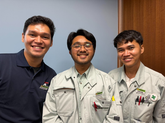
Nagatsu Manufacturing handles a wide range of manufacturing processes, from mold machining to molding and quality inspection through measurement. We spoke with the manager responsible for onboarding, workplace supervisors, and three engineers from the Philippines about their progress and the challenges they encountered during their first few months at the company.
While there is still room for improvement in their overall Japanese proficiency, one specific workplace challenge has become increasingly clear: the terminology used on the shop floor varies significantly from one department to another.
Key Takeaways
- The engineers learned their initial tasks quickly. In one case, an engineer was considered capable of handling most setup procedures independently after approximately one month.
- Rather than taking “Yes, I understand” at face value, supervisors verify understanding through repetition, drawings, and check-ins during the work process.
- A standardized list of approximately 200 vocabulary terms is being reconsidered in favor of a step-by-step learning approach tailored to each engineer’s assigned department.
Their Responsibilities Expanded Quickly in the Initial Stages
The three engineers began working in different areas: machining, molding, and measurement. One point consistently mentioned by their supervisors was how quickly they learned their jobs and how proactively they approached their work.
“They learn the job quickly. At this point, I feel that language is the main barrier.”
Within a few months of starting work, one of the engineers assigned to machining was able to perform an increasing range of relatively simple machining tasks independently. A supervisor in quality assurance also noted that, just over a month after onboarding, one engineer was already able to handle most of the initial setup procedures, known in Japanese manufacturing workplaces as dandori.
However, learning the initial processes is not the same as becoming fully proficient. One supervisor explained that it had taken him approximately three years to master more advanced tasks himself.
Rather than expecting employees to learn everything at once, the company first narrows the scope of the work assigned to them. As their practical skills and Japanese proficiency improve, the difficulty of their tasks can gradually increase. This step-by-step approach is an important foundation for a stable onboarding process.
”Yes, I Understand” Is Not Treated as Proof of Understanding
At the same time, supervisors sometimes find it difficult to determine whether instructions have truly been understood. Even when an employee responds with “Yes,” it does not necessarily mean that every detail has been fully understood.
When E, who works in machining, receives new instructions, he repeats them back in his own words or draws a diagram and asks, “Do you mean like this?” His supervisor also checks his work frequently during the process so that any misunderstanding can be corrected at an early stage. At the time of the interview, this approach had helped prevent most issues from developing into major mistakes.

In other departments, employees use translation apps to display written explanations and confirm instructions again when understanding appears uncertain. However, technical terminology is not always recognized correctly by speech-recognition systems. For this reason, translation tools alone are not enough. Repetition, diagrams, actual objects, and check-ins during the work process need to be used together.
The extent to which these practices have reduced the workload for supervisors has not yet been measured. Nevertheless, checking understanding during the process, rather than waiting until the work is completed, helps prevent major rework.
“Shop-Floor Language” Can Be Difficult Even When It Seems Ordinary to Japanese Employees
The language barrier is not limited to technical terms such as shashutsu seikei (injection molding) or shindashi (centering/alignment).
Words such as dandori (setup or preparation), toridashi (removal/take-out), daisha (cart/trolley), and kyatatsu (stepladder) may seem ordinary to Japanese employees working in manufacturing, but they are less likely to appear in general Japanese-language classes.
“Every day, I encounter new words and kanji. The kanji used at work are difficult.”
Moreover, the vocabulary required differs among machining, molding, and measurement. A word used every day by an employee in machining may not yet be necessary for someone working in measurement. This showed that teaching all three engineers the same vocabulary in the same order does not necessarily connect language learning effectively with their actual work.
Reorganizing Approximately 200 Terms Around the Order in Which They Are Needed at Work
Zuitt had prepared a list of approximately 200 Japanese terms related to safety, tools, parts, quality, and other areas. However, when the existing list was reviewed together with the engineers, it became clear that some of the terms were not currently relevant to their assigned departments.
The engineers themselves were also prioritizing words they had actually encountered at work, looking them up and reviewing them afterward.
“Even words that are difficult to memorize become easier to understand once I actually experience them at work.”
Based on these findings, the vocabulary will be reorganized into the following learning sequence:
- Safety and operational terms common to all departments
- Frequently used terms in the employee’s current department
- More advanced technical terminology required in that department
- Vocabulary for the next department, introduced before a transfer
This is not yet a finalized system whose effectiveness has already been demonstrated. Rather, it is a direction for future training-material revisions based on what was identified through these interviews.
Improving Not Only the Training Materials, but Also the Way Work Is Taught
When employees are still developing their Japanese proficiency, it can be difficult for them to understand lengthy explanations before performing a task.
“At this stage, I think it is faster for them to watch and learn first, and then receive the explanation, rather than listening to the explanation before starting.”
One approach being used is to let employees first observe and perform the task using actual equipment or materials, and then connect the experience with the relevant Japanese terminology afterward. Supervisors also provide comments on regular work reports, pointing out what employees should pay attention to next. These are some of the practical measures currently being used on the shop floor.
At the same time, the interviews suggested that positive evaluations from supervisors—such as “They learn quickly” or “They are doing well”—may not always be communicated clearly to the engineers themselves.It is important to communicate not only what needs improvement, but also what employees have become able to do. This can help them recognize their own progress and motivate them to continue learning.
Going forward, the challenge will be to move beyond relying solely on the individual efforts of supervisors and develop a more systematic onboarding process that integrates methods for checking understanding, appropriate levels of task difficulty, department-specific vocabulary, and feedback.
Four Conditions That Support Faster Workplace Integration
The experience at Nagatsu Manufacturing highlights four key practices:
- Narrow the scope of tasks assigned at the beginning.
- Confirm understanding through repetition, diagrams, and check-ins during the work process.
- Prioritize vocabulary that employees actually use in their current departments.
- Communicate employees’ progress as well as areas that need improvement.
At the time of the interviews, only a few months had passed since the three engineers joined the company. It is therefore still too early to evaluate long-term retention or return on investment.Nevertheless, Nagatsu Manufacturing’s approach—treating job-skill development and Japanese-language development as related but distinct processes, and using challenges identified on the shop floor to improve both operations and training materials—offers practices that may also be applicable to other companies.
Companies seeking to determine where to assign foreign engineers and which job skills and Japanese terminology to prioritize during onboarding are welcome to contact Zuitt for consultation.